Na-admit ang ate ko sa Adventist Hospital ng Santiago City around 3am, dahil sa pananakit ng tiyan. Pinalaboratory ang ihi at dugo, dinala at sinaksakan ng dextrose bago dinala sa Jasper Ward saka sinabihan na huwag kakain dahil ma-ultrasound. Mula sa oras na yon wala nang doctor na tumingin sa kanya sa ward.
Hindi makatulog, hindi makapagpahinga dahil namimilipit sa sakit. Iniiyak na lang nya ang sakit.
At around 1pm, hindi na niya makayanan ang sakit at gutom kaya pinagtyagaan niyang pumunta sa Nurse’ station at iniiyak doon ang pakiusap na asikasuhin siya. (Kasama niya ang yaya ng mga apo niya pero nahihiya itong magsabi sa mga personnel ng ospital).
Noon pa lang may tumingin sa ate ko na nadatnan ko at 2:35pm. Sinabi nila na ma-ultrasound. Makalipas ang 30 minutes, wala pa ring nangyari kaya pinuntahan ko ang nurse station at inaway sila. Noon pa lng nila kinuha ang ate ko at inultrasound. Noon lang nakakain at nakatulog ang ate ko.
After 40 minutes, tinest ng nurse ng allergy for antibiotics. Tinanong ko ang nurse kung ano ang nakitang sakit ng ate ko as basis in giving her antibiotics. Hindi daw niya alam basta sinabihan daw na bigyan ng antibiotic. Tinanong ko kung ano ang result ng ultrasound, bukas pa daw tingnan ng doctor at i-explain. At 4:20pm, nabigyan ng antibiotic ang ate ko.
MY GOODNESS! FROM 3AM TO 4:20PM, dextrose lng. Walang silbi ang pag rush sa kaniya sa ospital.
Ganon din ang experience ko noong maaksidente ang bunso kong kapatid. Dinala siya sa ospital na ito around 10pm, nilinis nila ang mga sugat, pinahiran ng betadine at linagyan ng dressing ang sugat sa ulo dahil malalim
Mula sa oras na yon, wala ding tumingin na doctor sa ward. Kaya nagpasya ang kapatid ko na ilipat siya sa Cauayan. Nagrequest ang hipag ko ng transfer ng 11AM at binayaran ang bill, nagcoordinate na rin sa ospital sa Cauayan at nagreserve ng ward. Pero ang bagal kumilos ang nga personnel ng Adventist Hospital. Alternate kami ni hipag na nagfollow up. Sabi nila, wala daw available na sasakyan kaya nagcoordinate ang hipag ko ng susundo sa kanila, 3pm lang may pumuntang doctor para iconfirm na magtransfer. Noon pa lng nila prinocess ang transfer, samantala 11am pa naghihintay ang sasakyang manggaling Cauayan na susundo. Around 7pm lng narelease ang kapatid ko.
Pagdating sa ospital ng Cauayan, tiningnanbagad ang mga sugat, nakita nila na hindi nalinis ng maayos ang sugat sa ulo. May mga buhangin pa at lupa sa mga sugat. Salamat na lang at nagpa transfer ang kapatid ko.
Kaya, mag-ingat po tayo, at piliin natin ang ospital na may magandang serbisyo.
If welcoming Christmas means being surrounded by a winter wonderland, here are the best places you can go to without the hassle of applying for a visa. Even with a third-world passport, you can easily fly over to these places. Just book your plane ticket, and you’re off to a winter wonderland this Christmas!
1. Jeju Island, South Korea
While it’s easy and free to apply for a tourist visa to South Korea,
nothing beats traveling with just a passport. Jeju Island, despite being
in South Korea, is a visa-free destination for Filipinos. This place is
best known for its beaches, but northern regions such as Eorimok is a
winter destination and perfect for sledding downhill.
How to get here
There aren’t any direct flights to Jeju Island from Manila. The
easiest way to get there without having to apply for a transit visa is
by flying from Hong Kong. If you plan to go to Jeju Island by skipping
the visa requirement, you might as well include Hong Kong in your
itinerary as it will make more financial sense or vice versa.
2. Mongolia
With its vast landscapes and open countryside, winter in Mongolia can
be surreal. Locals celebrate winter by creating ice sculptures, which
will mostly fill the scenery as you travel by train.
Although it doesn’t snow much in Mongolia, the temperature stays
below zero for months. That’s why sometimes there are still traces of
snow until the summer months.
How to get here
A Chinese transit visa is actually quite easy to apply for. However,
if you’d rather skip all that and just book and fly whenever you want,
non-stop flights are available in Hong Kong. Perhaps you can have a side
trip in Mongolia in the midst of your Hong Kong getaway?
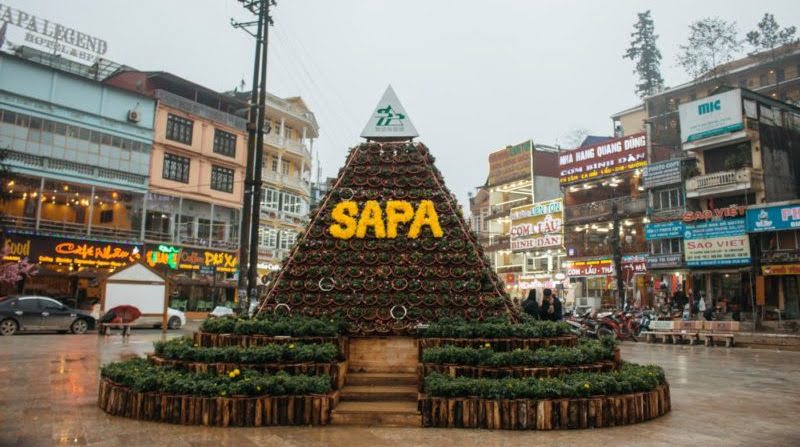
3. Sapa, Vietnam
Sapa in Vietnam widely known for its wonderful snowfall scenery in
the midst of a tropical Southeast Asian climate. It’s located in the
Northern part of Vietnam, some three to five hours drive from Hanoi.
In the winter, from December to February, the weather in Sapa becomes
very cold, especially at night. However, in return, visitors will have
the opportunity to watch the sunrise over the valley in the morning. In
recent years, there has been snowfall recorded in Sapa.
How to get here
Vietnam is visa-free for Philippine passport holders, and most
airlines in the country offer direct flights from Manila and Cebu. You
can fly from Manila or Cebu to Hanoi, then take a train or a bus to the
northern part of Vietnam – Sapa!
4. Israel
While every (Catholic) Filipino is aware of Jerusalem’s biblical
significance, there is more to this destination steeped in history.
Aside from its rich heritage, culture, picturesque ruins and buildings,
its northern region (Golan Heights) is a well-known ski site. Snow is
common in northern Israel between January and February.
How to get here
There aren’t many flights to Israel that are passport-friendly to
Filipinos, as most of them have to lay over in countries that aren’t
visa free. However, there are a few flights a week from Hong Kong that
goes straight to Tel Aviv Israel.
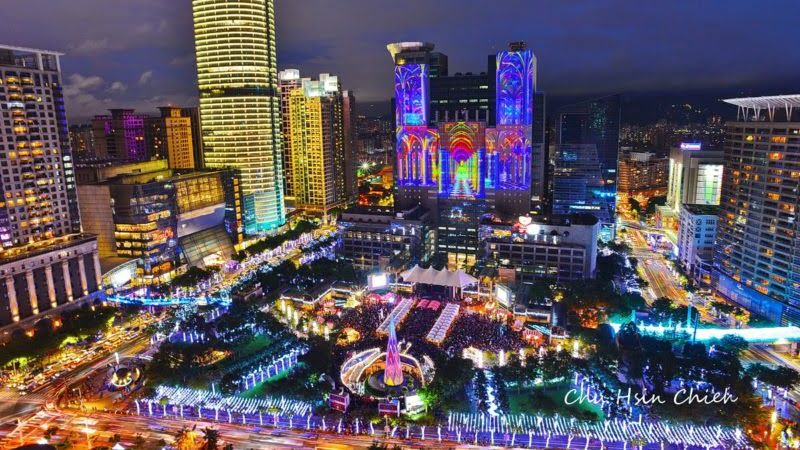
5. Taiwan
Taiwan is officially visa-free for Filipinos since November 1, 2017.
This country is by far the closest and the most practical destination to
experience winter. The spots that snow during the winter months of
December to February includes the Yushan (Jade Mountain), Hehuanshan,
Guanshan, Xueshan, and even the Yangmingshan National Park, which is an
easy day trip from Taipei.
How to get here
This snow-covered getaway is the most convenient pick for a white
Christmas for Filipinos because it’s just one plane ride away from
Manila. Cebu Pacific, Air Asia, and PAL offer direct flights daily.
6. St. Petersburg Russia
Not exactly visa-free but the e-visa
that they recently implemented virtually cost nothing. The application
is fairly simple, it can all be done online! Check out our step-by-step Russian e-visa guide if you want to head here for the holidays.
December is also a cold season in St.
Petersberg, making this destination a perfect place to make your white
Christmas dreams come true. Christian influence is all over this city
and it’s hard not to make this place one of the best Christmas
destinations in the world. While the snow is a good enough reason for
most Filipinos to visit St. Petersburg on a Christmas season, its deep
Christian roots will make this celebration more distinctive.
Did you know?
Christmas in Russia is normally
celebrated on January 7th (only a few Catholics might celebrate it on
the 25th December), because the Russian Orthodox Church uses the old
‘Julian’ calendar for religious celebration days. The official Christmas
and New holidays in Russia last from December 31st to January 10th.
Source: http://tiny.cc/whychristmas
St Petersburg is one of Europe’s
archaic cultural cities. It’s teeming with remnants of the Renaissance
era, transporting you back to the blossoming ages of arts in Europe.
There’s a handful of museums, galleries, and theatres that will offer
visitors an almost never-ending opportunity to discover not just Russian
traditions but also some of history’s finest international artworks and
architecture in the world.
Here are some of the most amazing places that you visit in St Petersburg!
The State Hermitage Museum
St Isaac’s Cathedral
Nevsky Prospect
Faberge Museum
Catherine Palace
Palace Square
Alexandrisky Theater
Peter and Paul Fortress
Yusupov Palace (Moika Palace)
Peterhof Palace and Gardens
Palace Embakment
Their underground Metro System
Whether you’re an art enthusiast or
just a casual traveler, it’s hard to be not inspired by the
architectural and cultural wonders of St Petersburg. As Russia becomes
one of the easy to access countries for Filipinos, it’s now easier for
Filipinos to have a taste of Western culture, art, and architecture than
ever.
How to get here
This isn’t a very convenient pick for a Christmas getaway due to the
number of connecting flights that you have to take to get here, but it’s
a great idea for an annual holiday destination. The easiest way is
flying from MNL to Hong Kong then to St. Petersburg, there are also
flights that connect from MNL to Dubai then to St Petersburg. Whichever
flight you choose to hop on, make sure you have a St. Petersburg visa
and a transit visa of the connecting country of your choice.
The Philippine passport may not be among the most powerful in the world, but it still opens up a handful of desirable destinations that could satisfy any Filipino’s wanderlust! With proper planning and budgeting, not even a visa requirement can stop you from going wherever you want to go this Christmas.
Source: The Best Christmas Destinations In And Out Of The Country
We can all agree that Christmas in the Philippines is more than just a
celebration, it’s a way of life. We don’t just celebrate Christmas, we
live for it! We are literally the only ones who celebrate it when the
calendar enters the -ber months. That’s why it wouldn’t be a surprise if
many of us have grand plans to culminate this occasion as the end of
December rolls around.
If you’re planning to usher in the holidays with a quick getaway, we
have compiled a list of destinations that might suit your wanderlust
with some great experiences sprinkled with a lot of Christmas spirit!
Christmas destination in the Philippines
Christmas is celebrated countrywide, but if you want to do away with
the typical celebration like how we do it in the metro, these
destinations might give you a Christmas experience like no other.
Bacolod
A city in Negros Occidental hailed as the city of smiles and widely
known for sweet delicacies. With that being said, Bacolod sports an
array of family-friendly food choices this Christmas season. If you’re
looking to have a gastronomic adventure while enjoying a vibrant
suburban scene, Bacolod will make it worth your while.
Other than being a foodie destination, Christmas is basically when
Bacolod shines – literally. A trip here during the holidays wouldn’t be
complete without paying Bamboo Tonogbanu’s Christmas Village a visit!
Cebu
The Queen City of the South has many things going on, not only will
you get a bite of the best lechon in the country, a dip in the most
pristine beaches in the world, but also the most festive Christmas in
the country. The fact that it houses some of the most iconic Churches
in the country means that attending the Simbang Gabi in Cebu will be as
grand as you could get.
Other than that, it wouldn’t hurt to have a side trip to some of the
nearby beaches. We’re in the Philippines after all, where you can never
go wrong in having a beach holiday whenever you want to, even during
Christmas!
Cavite
If you’re looking for something fiesta-like in celebrating Christmas,
heading north this December may give you a dose of traditional
festivities. During December, Christmas isn’t just the only reason why
this city celebrates, they also have Maytinis Festival. Well, it isn’t
exactly a fiesta but more of a celebratory occasion that’s greatly
connected to Christmas as it showcases a unique Filipino translation of
some of the Bible’s greatest highlights in the history of Christianity.
While it’s nonetheless an indigenous version of a Christmas
celebration, this region is the only one which holds float parades in
the middle of December. You won’t find that anywhere else in the
Philippines in time for Christmas.
Baguio
Because the Philippines is a tropical country, we don’t really get to
have a winter season. However, we do have Baguio City, and that is the
closest thing that we could ever get to a Winter Holiday.
With its temperate weather and laid back setting, you can sport your most fashionable beanies and sweaters as you do your holiday shopping in their sidewalk bazaars and flea markets. They may not be popular for their food, but if you’re the health-conscious type, you can indulge in some fresh fruits for cheap, especially strawberries!
Source: The Best Christmas Destinations In And Out Of The Country
The life of Henry Sy is worth to be re-posted and worth emulating.
‘ As an entrepreneur; it made me realize that indeed hardwork, perseverance, commitment and long term vision pays off. In the end, all efforts made shall bring infinite legacy to family generations after generations after generations..
🔸🔹The man who has been declared the richest person in the Philippines for the longest time.. 🔸🔹
“There is no such thing as overnight success or easy money. If you
fail, do not be discouraged; try again. When you do well, do not change
your ways. Success is not just good luck: it is a combination of hard
work, good credit standing, opportunity, readiness and timing. Success
will not last if you do not take care of it.”
Today, I’m now
going to feature the life story of the richest man in the Philippines.
He is no other than Henry Sy, the retail magnate who owns all
established 33 SM Malls and also a banking magnate who owns Banco De
Oro-EPCI Bank and majority share in China Bank.
This is another
inspiring story as we witness his rags to riches story on how he built
all SM Malls and became one of the biggest bankers enabling him to
become the richest man in our country surpassing both Lucio Tan and the
Ayalas.
Let’s learn and be inspired from another successful
entrepreneur story as his daughter Teresita Sy-Coson narrates the story
of his father’s success:
Our company, SM, as many of you may
already know, came from the hard work of my dad, Henry Sy, Sr. It is a
rags to riches story that even myself did not realize until I went to
trace his roots in China.
His journey from the thatched hut I saw there to the shopping centers he has today is something that amazes even myself.
His determination, his discipline and his thriftiness have produced an
astute and street smart businessman who has influenced a lot of people.
Including us, his children.
My father’s perseverance during the
different crises our country has gone through has made our active
business pursuits possible for a half century. True, he was disappointed
with the economy many times, but he never saw the reason to quit and
instead pursued his goals relentlessly.
He had many obstacles –
both external and internal – in his business, and there were times he
could not understand why things had to be so complicated for him to
pursue his business objectives.
It has been written – and I can attest that it is true – that Henry Sy started from the bottom.
He came to the Philippines at the young age of 12, and worked in his
father’s small sari-sari store more than 12 hours everyday to help him.
It was located on Echague St., which is now Carlos Palanca Sr. St. in
Quiapo, Manila. There, he devised ways to increase his income by
developing small portions of products – much like the sachets we see
today in the supermarkets.
He was able to make multiple sales in
order to make extra income, spending so much time in the store that he
had no time to go out and play with friends in the neighborhood. It did
not take a long time for him to realize, however, that he can only do so
much in a sari-sari store environment.
WWII came and the
sari-sari store was looted and burned. He did a lot of buying and
selling of odd things during the war to enable the family to survive.
This must have provided him the hands-on training for his stamina in
business. At one time, he was hit by shrapnel while selling, and quite
fortunately was brought to the hospital by his good friend in a kariton.
Without that friend, he could have bled to death. He treasured that
friendship and later expressed his gratitude after the war by making
that friend his partner in a shoe store. The partnership lasted for more
than 40 years until the shoe store had to give away to the building
renovations of the lessor.
After the war ended in 1945, he ventured into selling American shoes imported by enterprising Gis.
He later saw the opportunities of opening a shoe store, and not long
after he was managing three shoe store in partnership with friends.
With the pleasure of a growing family while at the same time pursuing
studies at FEU in the early 50s, he sought more ways to augment his
income.
He studied the market and decided to be different. While
other young men went to the US to pursue a higher education, he went on a
long business trip to the East Coast, and came home with a lot of
merchandising ideas.
For a time, he was selling a lot of shoes,
accessories, and leather goods, hoping to change the way shoe
manufacturers look at the industry.
Sensing a lot of
opportunities, he decided to open SHOE MART – “SM” – the first
air-conditioned shoe store that merchandised shoes in a very inviting
and classy format. With the success of that store, he went on to open
more shoe stores, but he could not get enough suppliers.
Many
shoe manufacturers at that time could not understand why they had to
listen to this shoe retailer who had very definite ideas on what he
wanted to sell. They did not cooperate by providing him with the volume
he needed, and because of that limitation, he gradually shifted to
apparel – and thereafter other merchandise – with the help of my mother.
He was continuously learning from his customers, suppliers, and
employees. This on-the-job research gave him enough confidence to expand
to a department store chain. Many things in life grow out of needs, and
to meet the needs, you become determined. With determination you will
take extra challenges and do things differently – which will most likely
bring success.
We opened our first department store in 1972, two
months after Martial Law was declared. The business had a slow start,
but progressed steadily. During the Martial Law years, he continued to
open more department stores, reaching a point wherein he could not get
space he needed in the existing shopping centers during that time. He
then decided think long term, and invest in properties for malls, which
were patterned after suburban shopping centers, which he had been
studying for some time.
When we started the construction of our
first mall in 1983, the Philippines was in the midst of a debt
moratorium and experienced hyper inflation. The economy decline was
further aggravated by the assassination of Ninoy Aquino. Many bankers
predicted our demise because my dad came from nowhere – he may had a few
department stores and shoe stores at that time, but he was not one of
the financial heavy-weights at that time.
Unaffected by
criticism, and armed with sheer determination and optimism, he persisted
and opened in 1985 with our department store and supermarket and a few
tenants. Many potential lessees were saying no to lease offers.
At about the same time, given the social unrest of the times, our own
Shoemart Makati was faced with ugly strikes. He almost gave up, but
through the encouragement of his employees and customers, he continued.
At that time, he decided emotionally draining disturbances should not
overpower him or detract him from his goals. Since that time, he has not
faltered in his confidence, and became even more determined to continue
the business. He also convinced everyone of us in the organization to
follow his optimism.
Later, we expanded, slowly building malls at
that time to get our formula right. The expansion was not without
difficulties. When constructing Sta. Mesa and Megamall, we were faced
with delays in construction due to cement shortages and the 1989 coups.
When the 1997 Asian crisis came, we were planning our mall expansion,
including the Mall of Asia, which was then envisioned to be the biggest
mall in the region.
Because my dad felt the tsunami-like effects
of the region wide crisis, which was unlike any other he had
experienced, we had to change plans. We deferred opening the Mall of
Asia, and went on with the opening of other malls.
We grew in
numbers instead of size, serving different smaller markets. We have also
expanded our retail business beyond department stores to include
supermarkets, hardware stores, appliance superstores, and other retail
formats.
At about the same time, we looked into the banking
business – both at our bank and at the industry. At the time, our main
bank, Banco de Oro was a medium sized bank. Because we were quite
conservative in lending, the deluge of bad loans that characterized the
times did not affect us. Given that, we thought it was an opportune time
to grow amidst some instabilities. We reorganized and strengthened our
organizations for about three years and developed growth strategies that
started in the year 2000.
Encouraged by the consolidation
program of Central Bank of the Philippines (BSP) in making Philippine
banks more competitive relative to the region, Banco De Oro made few
acquisitions because of the moratorium on banking. It acquired the Dao
Heng Philippines branch, the First eBank, the Banco Santander
Philippines branch, the United Overseas Bank branches, and most recently
– Equitable PCI Bank.
Opportunity is where you find it, not
where it finds you. Crisis and weakness indicate one can look for
opportunities. Transforming problems into opportunities can bring good
returns. Prosperity and growth come only to a business that
systematically exploits its potentials and systematically optimizes its
performances.
Our business – especially that of shopping centers
is a long term business. It takes at least eight years to pay back. We
feel that the country will always be around, and with Filipinos’ love
for shopping, there will always be customers we can sell to.
We
also have to continuously innovate. Our other retail formats like
supermarkets, hardware stores, appliance stores, home stores, toy
superstores, baby stores, and Watsons are continuously evolving with the
shopping habits of our customers. Because they frequently visit the
store, we make sure we have new products all the time so that their
shopping experience will not be boring.
Our group’s policy is to
look for opportunities at all times, and to be ready to act when it
comes. While crises may have brought opportunities, we continue our
plans in good or bad times with some changes to suit our demands of the
time.
May Henry Sy’s success rubs off to us as well. As a final note, I would like to leave this quote from Henry Sy: ““There is no such thing as overnight success or easy money. If you fail, do not be discouraged; try again. When you do well, do not change your ways. Success is not just good luck: it is a combination of hard work, good credit standing, opportunity, readiness and timing. Success will not last if you do not take care of it.”’
A one whole year always starts with the New Year’s Day. A day when everybody hopes and prays that the rest of the year will be better and brighter than the the past year.
But is it sufficient to just hope and pray? Many successful people around the globe are not idle. And we are lucky to have their lives documented and broadcasted for our consumption. Thus, anybody who has what it takes to follow their footsteps will really be at the top of life’s problems and challenges.
So how shall we make the year better? First is to look beyond New Year’s Day. There must be a plan of action in which goals are set. If a long term vision was already set, the plan of action for the whole year must be geared towards the realization of that vision. Actions can be changed but the goal shouldn’t. Then once in a while, make some evaluation in order not to deviate from the goal.
Personally, I always prepare my plan of action before the year ends. It really helps because it serves as my guiding star.





 Jollies Journal